I turn messy operational data into reports people can trust.
This is the build-side view of my data work.
I work across Power BI, SQL, Python, Excel, Salesforce and Tableau to clean data, fix reporting issues and build dashboards that help teams make decisions with more confidence.
I profile the source first, check the grain, clean the fields, build the model, write the measures and validate the output before I worry about the final dashboard layout.
Power BISQLPythonExcelSalesforceTableauPower Query
// what I check before visuals { "grain": "row, customer, month, provider", "quality_checks": ["nulls", "duplicates", "definition drift"], "outputs": ["dashboards", "QA checks", "clear notes"] }
At a glance
✓Data Analyst with 3+ years across BI, data quality and reporting
✓Current role: Social Value Portal, working with Salesforce, Excel, Power BI and DAX measures
✓MSc Artificial Intelligence, University of Huddersfield
✓Experience with stakeholders across Sales, Operations, Delivery and Support
✓Open to Data Analyst, BI Analyst and Reporting Analyst roles
Experience
Experience
3+
3+
years across data analysis and BI reporting
years across analysis, BI reporting and automation
Retention reporting
Preferred tools
20%
PBI · SQL
improvement supported through client health reporting
Power BI, SQL, Python and Excel are my main stack
Manual work saved
Best work
8–10h
QA + BI
per week through postcode validation work
cleaning messy data and turning it into trusted reporting
Project library
Total projects
14
14
BI, public-sector and commercial cases
public, commercial, synthetic, mock and MSc case studies
Quick context before the detail: experience, outcomes and portfolio depth.Quick context before the detail: experience, tools, strongest work and project coverage.
01
About me
I am a Data Analyst who likes the practical side of data work: finding why a number looks wrong, checking the source, speaking to the people who use the report and fixing the process so the same issue does not keep coming back.
In my current role at Social Value Portal, I work with Salesforce, Excel, Power BI, DAX measures and operational review data. Much of the work starts with messy records, unclear definitions, broken formulas or outputs that do not match what teams expect.
I am looking for Data Analyst, BI Analyst and Reporting Analyst roles where I can combine technical delivery with clear communication, stakeholder support and useful recommendations.
This view is for people who want to know how the work was built. I label the source type, explain the cleaning logic, show the model or measure decisions where useful and write down the checks I would use before trusting the output.
I do not treat dashboards as the starting point. For me, the first question is: what does one row represent, and what decision will this report support?
I try to understand the decision first, then check whether the data is clean enough to support it. That means looking for missing values, duplicates, broken joins, unclear definitions and manual steps that are likely to create errors.
My workflow is deliberately simple: define the question, confirm the grain, profile the source, transform the data, build the measure layer, validate the output, then explain the limitation.
Start with the user
Define the grain
I ask what the report needs to help someone decide, not just what chart they want.
I check whether the analysis sits at row, customer, crime, session, provider, project or month level.
Find the data issue
Profile before cleaning
I check whether the problem is missing data, duplicate records, a process gap or a definition issue.
I use SQL, Power Query, Python or Excel to check nulls, distinct counts, category drift and row-level logic.
Build the fix
Separate logic from visuals
I prefer repeatable validation checks and documented rules over manual one-off corrections.
I keep measures, transformations and assumptions clear so the dashboard is easier to review later.
Explain it clearly
Leave a trail
I write plain-English notes so non-technical users know what changed and what action to take.
I include limitations and next checks because real analysis always has context around it.
03
Experience
I rewrote this section around the problem, action and outcome behind the work, not just the tools used.
May 2025 – Present United Kingdom ● current
Data Analyst
Social Value Portal
ProblemClient and operational reports could be affected by missing values, duplicate records, wrong formats, broken formulas and inconsistent definitions.
ActionReviewed Salesforce, Excel and Power BI outputs, documented the issues and built repeatable checks so teams could use cleaner reporting data.
OutcomeImproved review-cycle data quality by 30% and increased validation delivery speed by 15%.
ProblemLocal record checks against TOMs data were inconsistent and took time to repeat manually.
ActionGathered requirements from Product, Sales, Delivery and Support, then built a postcode checker using the Postcode.io API, Python and Claude.
OutcomeReduced manual postcode checking by around 8–10 hours per week and helped standardise checks across teams.
ProblemTeams needed a clearer view of client account health, project performance and risk areas.
ActionBuilt Power BI and Excel reporting for Sales and Operations, including DAX measures for client health, project performance and risk KPIs shaped around the questions those teams were asking.
OutcomeSupported actions linked to a 20% improvement in retention rate.
AutomationBuilt an Excel, VBA and Python health-checking tool that reviews 15–20 client evidence sheets at once and flags formula, format, mismatch and duplicate issues.
OutcomeSaved around 1 hour per template while keeping reporting controls and documentation GDPR-aware.
Oct 2025 – Present Part-time
Freelance Data Analyst and Course Designer
Self-employed · Fiverr, Upwork, direct clients and Outlier AI
Client workHelped small businesses clean, organise and analyse data using Excel, SQL, Power BI, BigQuery and Python.
OutcomeTurned unclear business questions into simple reports for sales, operations, customer activity and project tracking.
TeachingDesigned and delivered a practical analytics course covering Excel, SQL, PostgreSQL, Power BI, Python, dashboard design and KPI reporting.
OutcomeTaught 15+ learners and supported 3 learners into data-related placements.
May 2022 – Aug 2023 India
Associate Data Analyst
TECHROLE Solutions Pvt. Ltd.
ProblemRetail and FMCG clients needed cleaner sales, pricing, promotion and supply-chain reporting from multi-source datasets of 50k+ rows.
ActionCleaned and combined data using SQL, Python, Power Query and Databricks, then built reporting tables for Tableau dashboards.
OutcomeReduced manual processing time by 30% and helped stakeholders access cleaner reporting data faster.
Commercial workInvestigated pricing changes, sales trends and campaign results using correlation analysis, anomaly checks and A/B testing.
OutcomeHelped a key FMCG client increase promotional revenue by 15%.
PrioritiesManaged changing reporting requests through ticketing systems, Slack and Microsoft 365, clarifying urgency before delivery.
OutcomeKept reports moving under tight deadlines without losing the business context behind each request.
Jan 2022 – Apr 2022 Internship
Data Analyst Intern
TECHROLE Solutions Pvt. Ltd.
ProblemClient files needed cleaning before they could be used for weekly reporting and dashboard work.
ActionCleaned and standardised datasets using advanced Excel, VBA and SQL, fixing missing values, duplicate records and inconsistent formats.
OutcomeCreated customised Excel templates and helped combine CRM and in-house data into a clearer reporting source.
Team workWorked with cross-functional teams to understand reporting needs and produce weekly insight summaries.
OutcomeImproved dashboard adoption by 40% by making the outputs easier for client teams to use.
03
Build approach, not job history
In this view I am not repeating my CV. I am showing the type of analytical work I do and the checks I care about when another analyst looks at the project.
Operational data quality
I check missing values, duplicate records, wrong formats, broken formulas and inconsistent definitions before I trust a report.
BI reporting layer
I separate cleaning logic, model structure and measures so the dashboard is not hiding too much logic inside visuals.
Commercial analysis
I look past headline revenue and check margin, conversion, campaign cost, stock risk and whether the metric supports an actual decision.
Open-data projects
I use public data to practise the same habits I use professionally: source labels, clean definitions, validation notes and honest limitations.
Automation mindset
If a check is repeated often, I try to make it reusable through SQL, Python, Power Query, Power Automate, N8N or VBA.
What I would improve next
I usually write this down on purpose. Missing context, weak assumptions and future validation checks are part of the analysis, not an embarrassment.
04
Skills and evidence map
How to read this sectionI do not score myself with percentages because that can look made up. I group skills by how the evidence shows up in my work.
Current roleUsed in live operational reporting, validation or stakeholder work.
Professional deliveryUsed in paid analyst work or client reporting.
Strong portfolio evidenceShown through a full project with visuals and logic.
Academic or project exposureUsed in MSc work, experiments or supporting projects.
Click a skill. The matching skill labels across the page will glow and move slightly, so you know exactly where to look. I am not highlighting whole sections anymore.
BI, reporting and dashboarding
Data extraction, cleaning and analysis
Data quality, automation and governance
Commercial and analytical methods
05
Projects
These are the projects I would lead with in an interview because they show reporting, data quality, operational analysis and commercial thinking.
These are the strongest build-side projects because they show source profiling, modelling choices, repeatable calculations, validation and clear limitations.
Public sector · Public data
UK Police crime outcomes
★
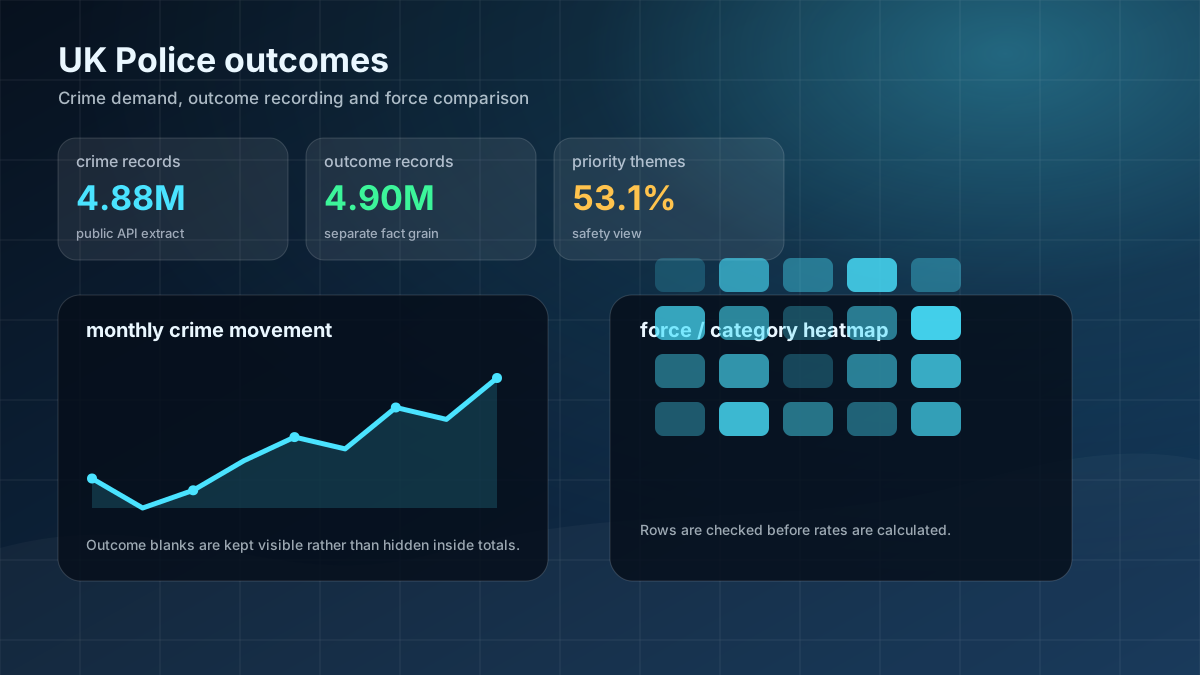
I used public crime and outcome data to show where demand is growing, which categories create the largest workload, and where outcome recording may need attention. It shows how I turn complex public-sector data into a clear performance story.
I reviewed the PBIX model, DAX, Power Query and fact-table structure, then processed 4.88M crime records and 4.90M outcome records using chunked Python aggregation. I kept record counts separate from distinct crime IDs to avoid misleading percentages.
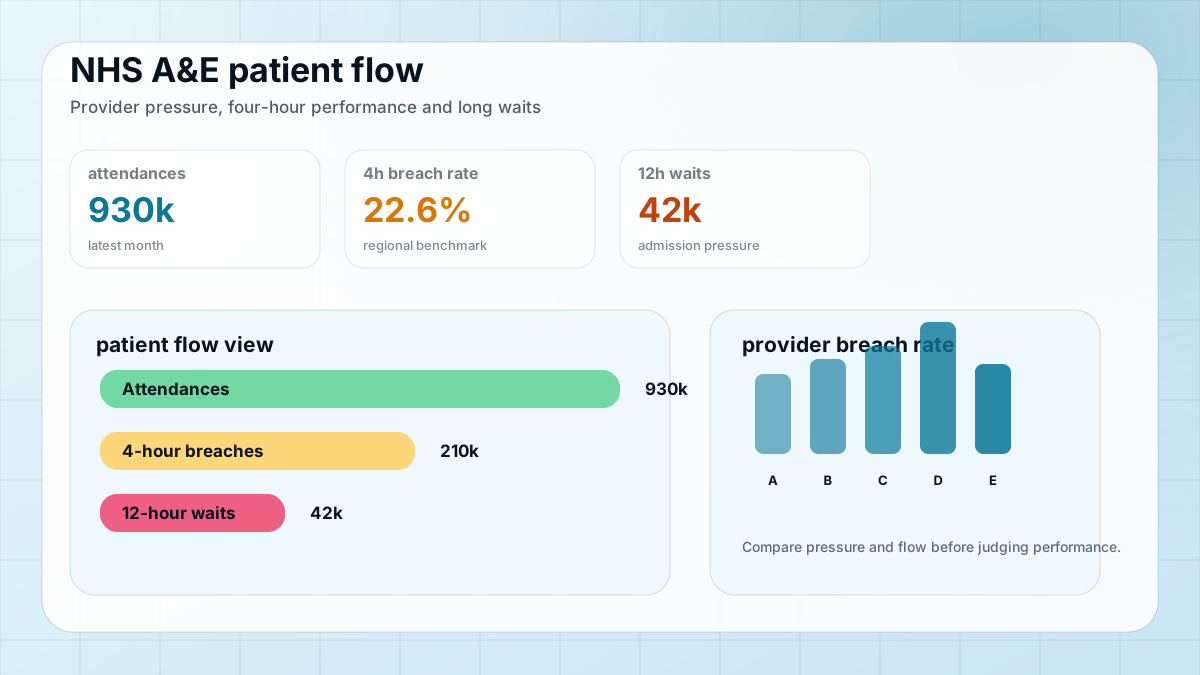
I built a healthcare performance dashboard tracking A&E attendances, four-hour breaches and 12-hour admission waits. It shows how I approach operational pressure, provider comparison and performance reporting.
I cleaned NHS England monthly A&E files, standardised provider and regional fields, created KPI summaries, and checked latest-month totals before creating regional and provider-level views.
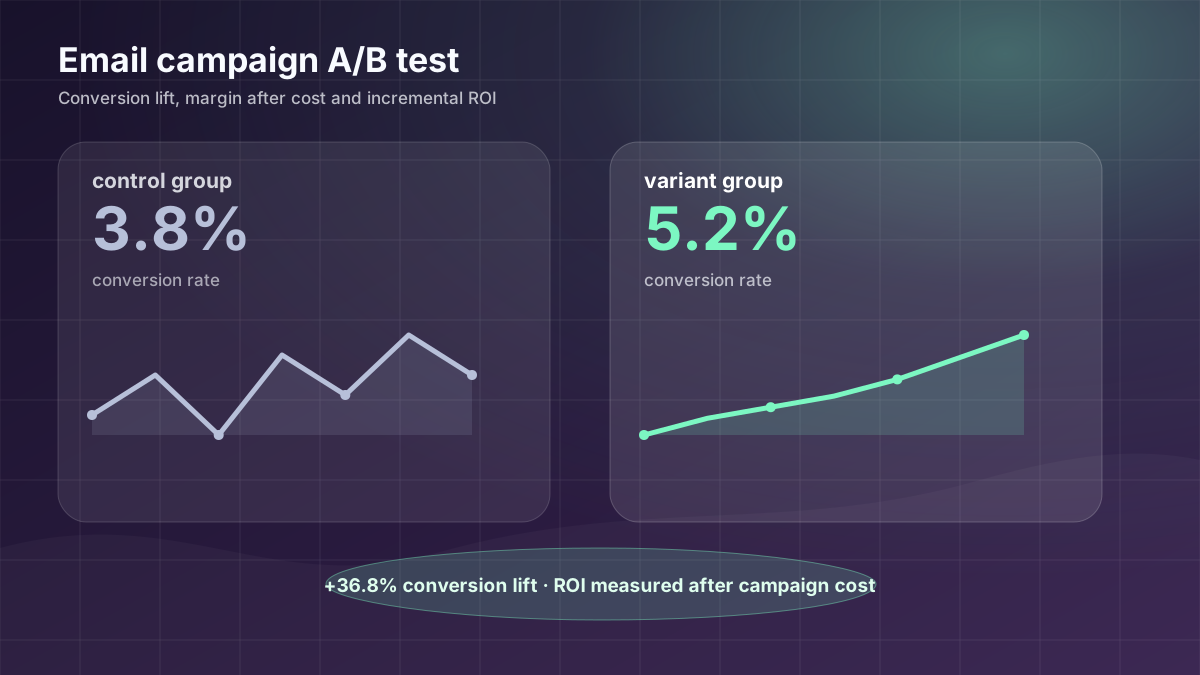
I analysed a campaign test to show whether emails created extra profit after cost, not just extra conversions. It shows commercial thinking and the ability to separate real uplift from headline performance.
I compared control and treatment groups using conversion rate, revenue per customer, incremental margin, campaign cost and ROI. I would improve the next version with confidence intervals and segment-level testing.
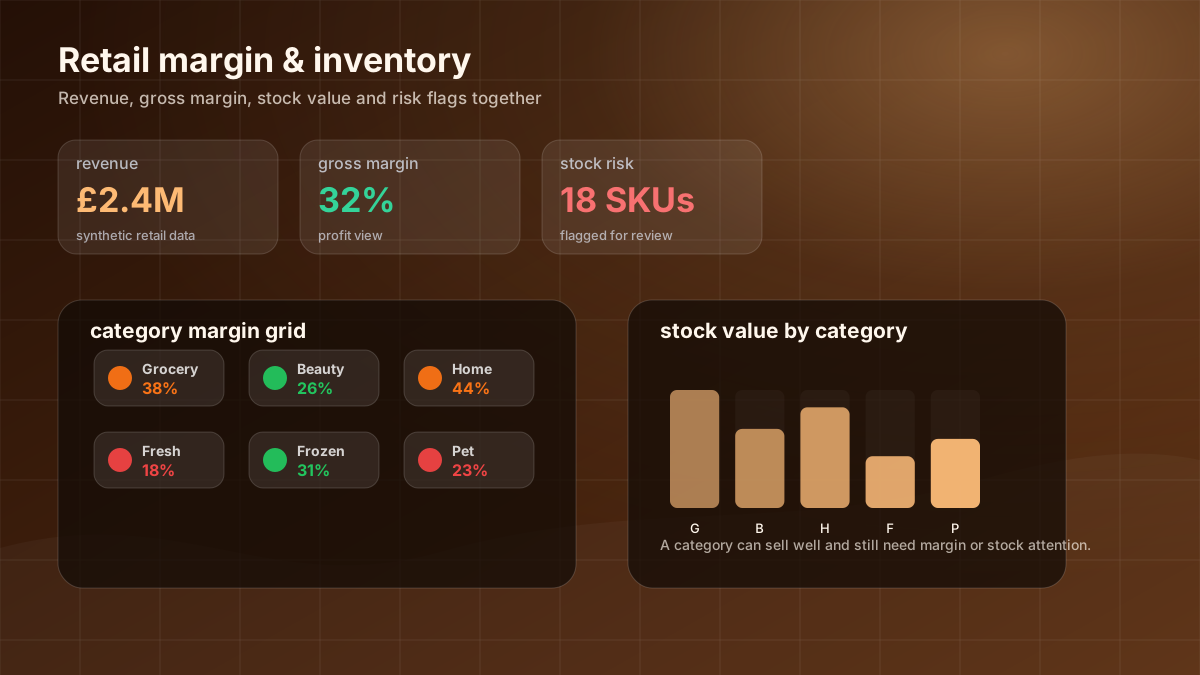
I created a retail dashboard that goes beyond sales totals by showing margin, profit and stock risk together. It helps identify where revenue looks healthy but availability or profitability may be under pressure.
I used synthetic sales and inventory data to calculate revenue, gross profit, margin, stock value and risk flags. I compared categories by both profit and margin, then separated stock-out and excess-stock risk.
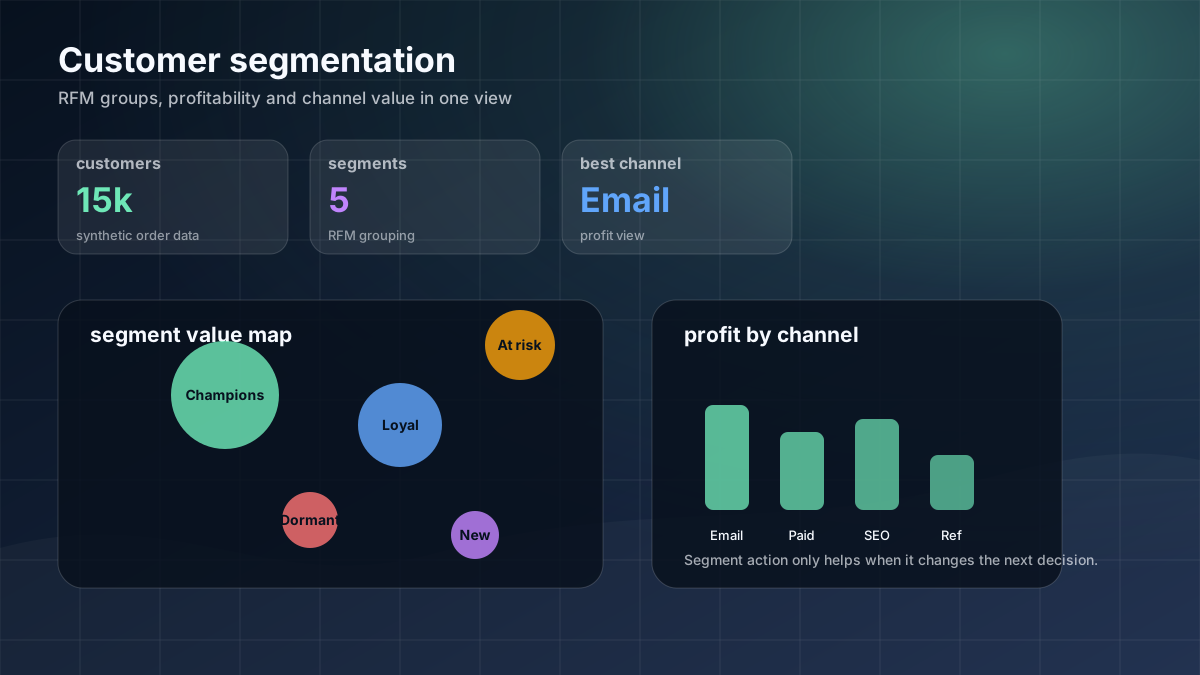
I segmented customers to show which groups are most valuable and where retention or reactivation should be prioritised. It shows how customer history can support targeted marketing decisions.
I calculated RFM scores using synthetic order-history data, grouped customers into readable segments and compared revenue, profit, frequency, recency and acquisition channel performance.
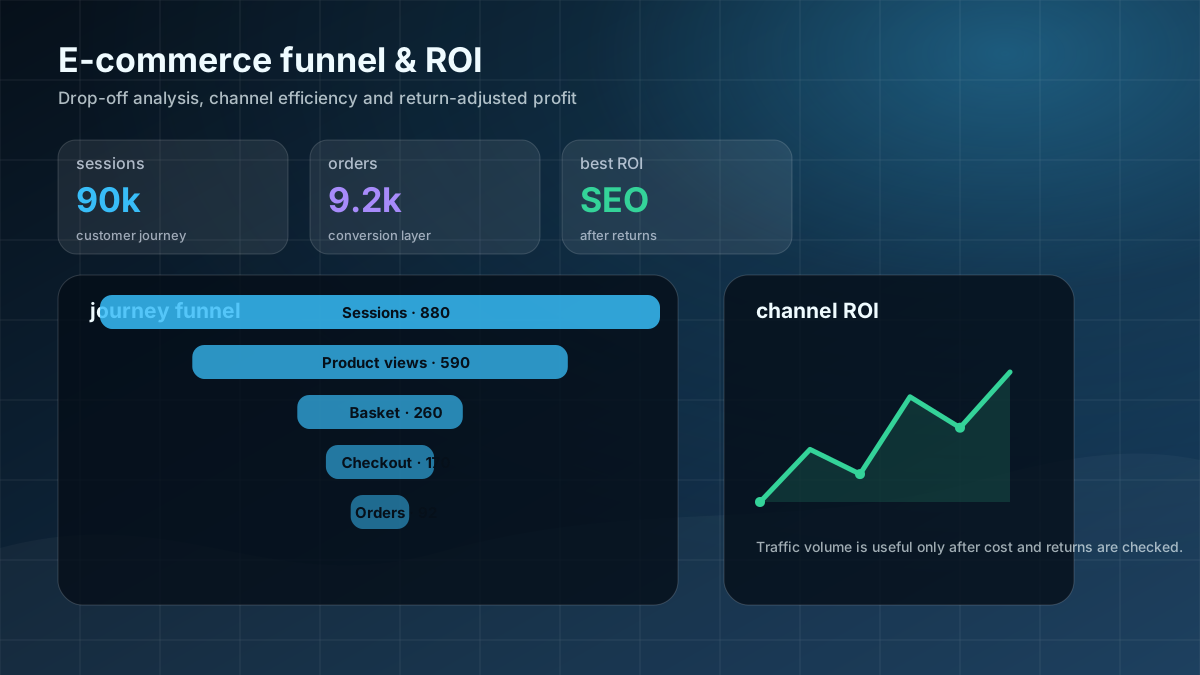
I built a funnel and ROI dashboard showing where customers drop out and which channels stay profitable after marketing costs and returns. It focuses on traffic quality, not vanity volume.
I analysed 90,000 synthetic sessions using session-to-order conversion, revenue per session, return effect, channel spend and gross profit after marketing. Python summaries were shaped into Power BI-ready outputs.
I am looking for Data Analyst, BI Analyst and Reporting Analyst roles in the UK, especially work involving Power BI, SQL, data quality, operational reporting and stakeholder-led analysis.
I am happy to discuss modelling decisions, validation checks, DAX measures, SQL logic, Python workflows or how I explain technical findings to non-technical users.